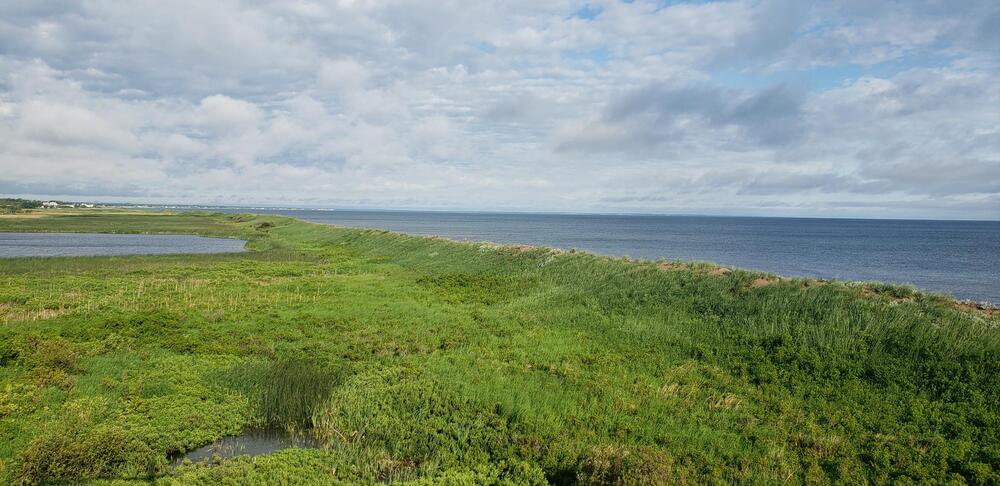
Cap-Acadie is a coastal municipality where the sea plays an important role in the landscape, the environment, and daily life. The beaches, dunes, and marshes are home to several species and help protect the territory. This proximity to the ocean also positively influences the local economy through tourism, recreation, and fishing.
Aboiteau Beach is an iconic site that is very popular during the summer. The surrounding dunes are essential: they reduce erosion, lessen the impact of storms, and protect infrastructure and nearby ecosystems. They also provide habitat for several species, including shorebirds during migration.
Aware of these challenges, the Regional Municipality of Cap-Acadie is implementing measures to adapt its infrastructure and protect its coastal environment. Approaches such as Vision H2O support a comprehensive and sustainable management of water and natural environments.
Protecting dunes is essential to preserving the Cap-Acadie coastline, especially at Aboiteau Beach.
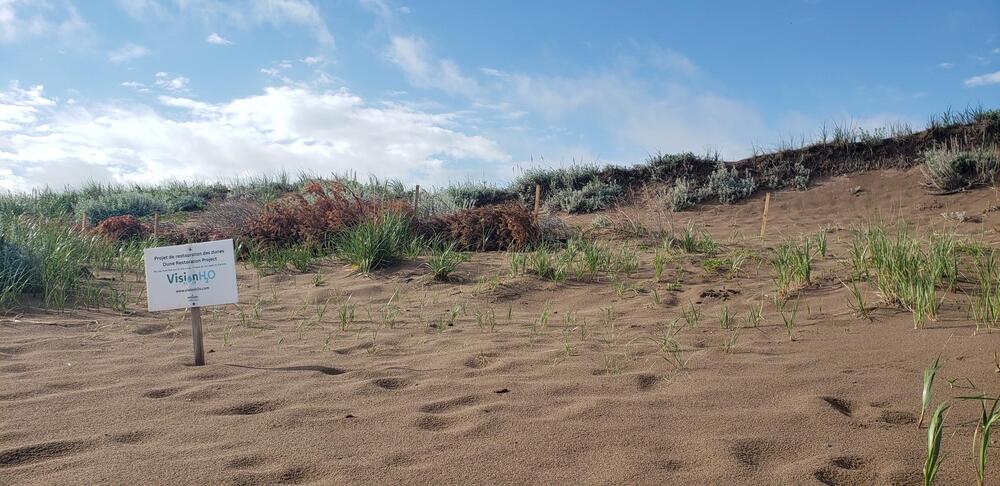
Among the measures in place is the installation of fences to prevent visitors from trampling ammophila (beach grass), a plant that stabilizes the sand and helps dunes form.
As a visitor, you also have a role to play. Here are some good practices to follow when visiting the coastal area:
Respect instructions and notices on posted signs.
Use boardwalks and designated paths to access the beach.
Avoid walking on dunes and vegetation.
Respect wildlife, such as birds near the dunes, and avoid disturbing them.
Use provided trash bins or take your waste with you.
These simple actions help preserve the beach and dunes for future generations.
Dune restoration is a priority for maintaining the resilience of the Cap-Acadie coastline, particularly at Aboiteau Beach. In collaboration with Vision H2O, actions are being taken to support dune regeneration.
Each year, the municipality encourages citizens to recycle their Christmas trees by dropping them off at the Aboiteau Beach parking lot so they can be collected and placed on the dunes. These trees help trap wind-blown sand and promote its accumulation.
In spring, ammophila plants are also added to barren areas to accelerate restoration. Ammophila plays an essential role: it holds sand in place with its leaves and stabilizes dunes through its root system.
Through these combined efforts, the dune gradually regains its natural structure and its ability to protect the coastline.